 Skip to content

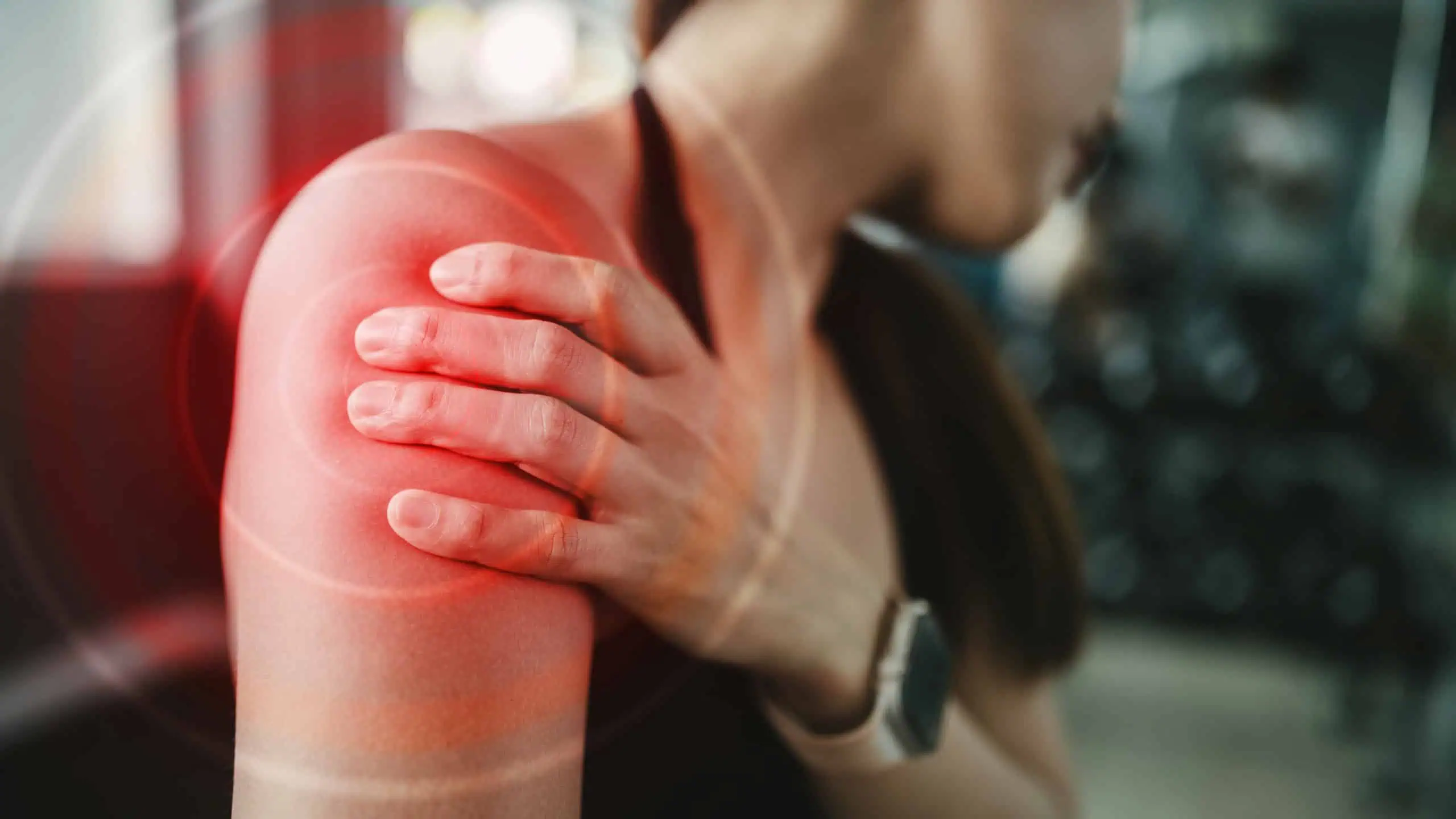

A shoulder tear can mean very different things.
It might involve the:
- Rotator cuff
- Labrum
- Biceps tendon
- Cartilage
- Another tendon or stabilizing structure
And that distinction matters when someone is considering regenerative treatment.
Some shoulder injuries may be reasonable to evaluate for a nonsurgical regenerative approach. Others involve significant instability, displaced tissue, or a complete structural tear that may require orthopedic surgery.
The most important first step is understanding what is actually torn and how severe the injury is.
Table of Contents
Quick Answer: Can Stem Cells Help a Shoulder Tear?
Mesenchymal stromal cells, or MSCs, and other orthobiologic treatments are being studied for several musculoskeletal conditions.
However, the evidence varies considerably depending on the type of shoulder injury.
Research involving biologic treatment is more developed for rotator cuff disease and tendinopathy than for injuries such as shoulder labral tears.
Direct human evidence specifically supporting stem-cell injections for a torn shoulder labrum remains very limited.
That means a shoulder MRI showing a “tear” does not automatically make someone a candidate for stem-cell treatment.
Candidacy depends on factors including:
- What structure is torn
- Partial vs complete tear
- Acute vs chronic injury
- Shoulder stability
- Pain and functional limitations
- Age and activity level
- Previous treatment
- Imaging findings
- Whether surgery is medically indicated
What Does “Shoulder Tear” Actually Mean?
The shoulder contains several structures that can tear.
Rotator Cuff Tear
The rotator cuff is a group of tendons that help stabilize and move the shoulder.
Tears can be:
- Partial thickness
- Full thickness
- Small
- Large or massive
- Acute
- Degenerative
We have a separate article dedicated specifically to stem cells for rotator cuff tears, because the evidence and treatment considerations are substantial enough to deserve their own discussion.
AAOS updated its clinical practice guideline for adult rotator cuff injuries in August 2025. Treatment depends on the type and severity of the tear, symptoms, function, and individual patient characteristics. (AAOS)
Labral Tear
The labrum is a ring of fibrocartilage surrounding the shoulder socket.
It contributes to stability and helps anchor several structures.
Common labral injuries include:
- SLAP tears
- Anterior labral tears
- Posterior labral tears
- Tears associated with shoulder dislocation or instability
A torn labrum is different from a torn rotator cuff tendon.
That means research involving one should not automatically be used as evidence for the other.
Biceps Tendon Injury
The long head of the biceps attaches near the superior labrum.
That is why biceps and labral problems can sometimes occur together.
Depending on the injury, treatment might involve rehabilitation, injections, or surgical procedures involving the biceps or labrum.
Articular Cartilage Damage
The shoulder joint also contains articular cartilage covering the surfaces of the humerus and glenoid.
Cartilage injury may occur because of:
- Trauma
- Instability
- Repeated dislocations
- Osteoarthritis
- Other degenerative processes
Again, this represents a different problem from a tendon or labral tear.
Stem Cells for Shoulder Labral Tears
This is where the evidence needs to be presented carefully.
There is scientific interest in using MSCs and tissue-engineering approaches to support fibrocartilage repair.
But direct clinical evidence for injecting stem cells into patients specifically to treat a torn shoulder labrum is currently very limited.
For example, a 2026 study described the development of a patient-specific, 3D cryobioprinted glenoid-labrum scaffold incorporating human mesenchymal stem cells.
That is interesting regenerative research.
But it was a tissue-engineering study, not a clinical trial demonstrating that stem-cell injections repair labral tears in patients. The authors described it as groundwork for future translational research. (PubMed)
That distinction matters.
A promising laboratory strategy should not be marketed as though it already represents a proven treatment.
What If My Labral Tear Is Causing Instability?
This may significantly change the treatment conversation.
A shoulder that repeatedly:
- Dislocates
- Subluxates
- Gives way
- Feels mechanically unstable
has a structural problem that may not be addressed by an injection alone.
AAOS educational guidance treats shoulder instability and SLAP/labral pathology as distinct orthopedic problems requiring diagnosis and appropriate management. (AAOS)
In those cases, an orthopedic surgical opinion may be particularly important.
What About Rotator Cuff Tears?
There is considerably more orthobiologic research involving the rotator cuff.
Studies have examined treatments including:
- PRP
- Bone-marrow-derived products
- MSCs
- Biologic augmentation during surgical repair
But even here, the evidence does not support treating every rotator cuff tear the same way.
For example, a 2024 review of randomized trials evaluating PRP in partial-thickness rotator cuff tears found some improvements in pain but substantial differences between studies and less consistent long-term functional improvement. (PubMed)
AAOS currently maintains a dedicated evidence-based guideline for rotator cuff injuries. (AAOS)
Read our full guide: Stem Cells for Rotator Cuff Tears: What Patients Should Know.
Partial Tear vs Complete Tear
This is one of the most important distinctions.
Partial Tear
Some fibers remain intact.
Depending on the structure and severity, treatment may include:
- Activity modification
- Physical therapy
- Strengthening
- Medication
- Injection-based treatment
- Regenerative approaches
- Surgery in selected cases
Complete Tear
The tissue has been fully disrupted.
That does not automatically mean every complete tear needs surgery.
But it does mean the mechanical function of the structure becomes especially important.
A regenerative injection should not be assumed to:
reconnect two completely separated pieces of tissue
or
restore mechanical stability to an unstable joint.
That is why imaging and physical examination matter.
Acute Shoulder Tear vs Chronic Shoulder Pain
Another important distinction is when the injury occurred.
Someone who suddenly injured a shoulder yesterday and cannot lift the arm may need a very different evaluation from someone who has had an aching shoulder for three years.
An acute injury may require evaluation for:
- Complete tendon rupture
- Dislocation
- Fracture
- Significant labral injury
- Other traumatic damage
Regenerative treatment should not delay appropriate diagnosis or orthopedic management.
Chronic symptoms, on the other hand, may involve:
- Tendinopathy
- Degenerative partial tears
- Osteoarthritis
- Old injuries
- Multiple overlapping problems
Those may create a different conversation about nonsurgical options.
Can Stem Cells Regrow a Torn Shoulder?
This claim needs caution.
It is not currently appropriate to promise that a stem-cell injection will:
- Regrow a completely torn labrum
- Reattach a ruptured tendon
- Restore normal cartilage
- Reconstruct an unstable shoulder
- Eliminate the need for surgery
Research into MSCs examines several possible effects, including signaling related to inflammation and tissue repair.
But improvement in pain or function is not the same thing as proving that a torn structure completely regenerated.
Those outcomes should be discussed separately.
When Might Someone Consider a Regenerative Evaluation?
A patient may reasonably discuss regenerative treatment when they have:
- Persistent shoulder pain
- A chronic partial tendon injury
- Degenerative shoulder changes
- Symptoms that have not improved enough with conservative care
- A desire to understand nonsurgical options
- Imaging available for review
That does not mean treatment will automatically be recommended.
A good consultation may ultimately conclude:
regenerative treatment is reasonable to consider
or
physical therapy should be tried first
or
an orthopedic surgical evaluation makes more sense.
When Might Surgery Be More Appropriate?
Surgical evaluation may become particularly important when there is:
- Significant mechanical instability
- Recurrent dislocation
- A complete traumatic tendon tear
- Severe weakness or loss of function
- A major displaced structural injury
- Advanced joint destruction
- Failure of appropriate nonsurgical treatment
The existence of regenerative options does not make surgery inherently wrong.
Likewise, the existence of a surgical option does not mean every patient needs to proceed immediately.
The appropriate treatment depends on the individual injury.
What Happens During a Shoulder Regenerative Consultation?
At The Re/ Clinic in Sandy, Utah, the goal of the consultation is to understand what is causing the shoulder symptoms before deciding whether regenerative treatment is appropriate.
That may include reviewing:
Your MRI or Imaging
The provider needs to know which structure is actually damaged.
How the Injury Happened
Was there a fall, sports injury, dislocation, repetitive use, or gradual onset?
Your Symptoms
Does the shoulder:
- Hurt?
- Catch?
- Click?
- Give out?
- Feel weak?
- Lose range of motion?
Previous Treatment
Have you tried:
- Physical therapy?
- Rest?
- Strengthening?
- Other injections?
- Orthopedic evaluation?
Your Goals
The treatment discussion may differ considerably between someone who wants to return to competitive athletics and someone trying to sleep comfortably and perform normal daily activities.
Frequently Asked Questions
Can stem cells help a shoulder tear?
Possibly in selected musculoskeletal conditions, but evidence varies significantly depending on the structure involved.
There is more biologic research involving rotator cuff disease than shoulder labral tears.
Can stem cells heal a torn shoulder labrum?
Direct human clinical evidence demonstrating that stem-cell injections repair shoulder labral tears is currently very limited.
A 2026 study involving MSCs and glenoid-labrum bioprinting represents early tissue-engineering research rather than clinical proof of an injectable treatment. (PubMed)
Can stem cells help a rotator cuff tear?
Cell-based and other orthobiologic therapies have been studied for rotator cuff disease, but evidence varies by product, tear type, and treatment approach.
See our dedicated Stem Cells for Rotator Cuff Tears article for the full evidence review.
Can a complete shoulder tear heal without surgery?
It depends on which structure is torn, tear size, symptoms, stability, age, activity level, and functional goals.
A complete tear does not automatically mean surgery, but significant traumatic or mechanically unstable injuries deserve orthopedic evaluation.
Can regenerative treatment replace shoulder surgery?
Not in every case.
An injection cannot automatically restore mechanical stability or reconstruct a completely disrupted structure.
For some patients, surgery may remain the more appropriate option.
Do I need an MRI before considering treatment?
Imaging can be extremely helpful when a structural shoulder tear is suspected.
The provider needs to understand what is actually damaged before recommending an intervention.
Are stem cells FDA-approved for shoulder tears?
No stem-cell product is currently FDA-approved specifically for shoulder tears or shoulder pain.
FDA continues to identify orthopedic uses of regenerative medicine products, including shoulder pain, as unapproved indications. (U.S. Food and Drug Administration)
A Shoulder Tear Is a Diagnosis, Not One Treatment
The most important takeaway is simple:
Not every shoulder tear is the same.
A partial degenerative rotator cuff tear is different from a traumatic complete tendon rupture.
A SLAP tear is different from shoulder arthritis.
A chronically painful but stable shoulder is different from one that repeatedly dislocates.
So before asking:
“Can stem cells fix my shoulder?”
start with:
“What exactly is torn?”
At The Re/ Clinic in Sandy, Utah, we review symptoms, history, imaging, and treatment goals to determine whether regenerative treatment may be appropriate or whether another treatment pathway should be considered. The clinic currently offers regenerative medicine services using umbilical cord-derived products. (The Re/ Clinic)
Schedule a regenerative medicine consultation to have your shoulder injury reviewed.
Call: 385-240-1000
Location: 9035 S 700 E, Sandy, UT 84070 (The Re/ Clinic)
References
- American Academy of Orthopaedic Surgeons. Clinical Practice Guideline on the Management of Rotator Cuff Injuries. Updated August 18, 2025. (AAOS)
- American Academy of Orthopaedic Surgeons. Shoulder and Elbow Resident Curriculum. Includes shoulder instability, SLAP tears, biceps lesions, rotator cuff disease, and shoulder arthritis as distinct orthopedic conditions. (AAOS)
- da Silva et al. Patient-specific 3D cryo(bio)printing of a glenoid labrum scaffold for fibrocartilaginous tissue engineering. 2026. Early laboratory work involving human MSCs and glenoid-labrum tissue engineering, not a clinical injection trial. (PubMed)
- Effectiveness of platelet-rich plasma in partial-thickness rotator cuff tears: a systematic review. 2024. Review of randomized trials demonstrating mixed results and substantial study heterogeneity. (PubMed)
- U.S. Food and Drug Administration. Important Patient and Consumer Information About Regenerative Medicine Therapies. FDA states that regenerative medicine products are not approved for orthopedic indications including shoulder pain. (U.S. Food and Drug Administration)
Utah Stem Cell Therapy Notice
THIS NOTICE MUST BE PROVIDED TO YOU UNDER UTAH LAW.
This health care practitioner performs one or more stem cell therapies that have not yet been approved by the United States Food and Drug Administration.
You are encouraged to consult with your primary care provider before undergoing a stem cell therapy.