 Skip to content

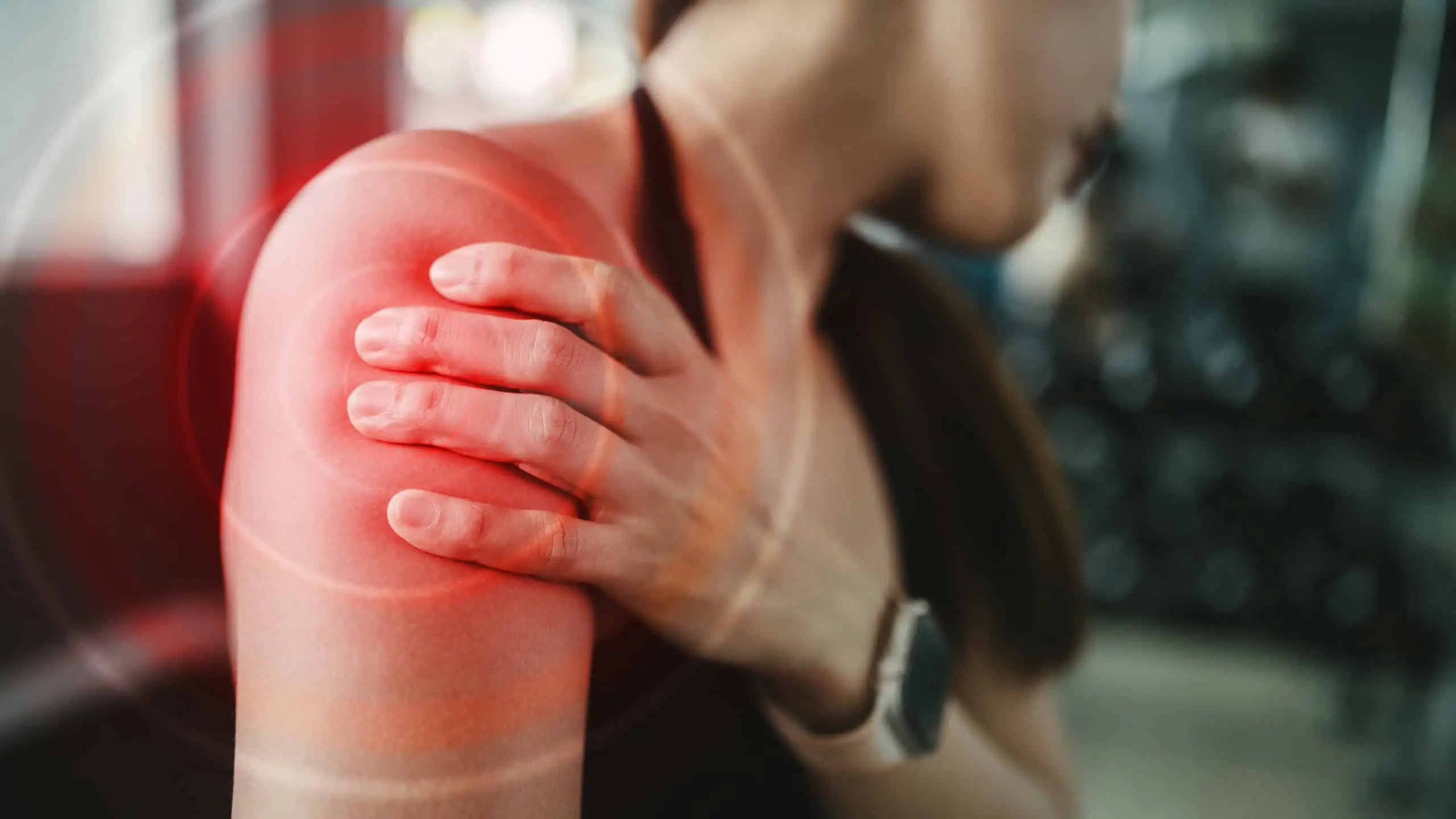


A rotator cuff tear can make everyday movements surprisingly difficult. Reaching overhead, sleeping on your side, lifting something off a shelf, working out, or even putting on a jacket can become uncomfortable.
For patients who have already tried physical therapy, injections, rest, or other conservative treatments, regenerative medicine is increasingly becoming part of the conversation.
But can stem cells actually help a rotator cuff tear?
The most accurate answer is that cell-based therapies for rotator cuff injuries are still being studied, and the research is promising in some areas but far from definitive. Results can also vary significantly depending on the type and severity of the tear, the biologic product being studied, and how treatment is performed.
At The Re/ Clinic in Sandy, Utah, the first step is understanding exactly what is happening in the shoulder and whether regenerative treatment makes sense for the individual patient.
Table of Contents
Quick Answer: Can Stem Cells Help a Rotator Cuff Tear?
Stem cell and other cell-based therapies are being investigated for rotator cuff injuries because researchers are interested in whether biologic treatments may influence the environment around an injured tendon.
Human research is still limited and has produced mixed results.
For example, a randomized controlled trial involving 24 patients with partial supraspinatus tendon tears found that mesenchymal stem cell injections were not more effective than control injections for pain or shoulder function. Another small study involving 19 patients with partial-thickness tears reported improvements in pain, strength, function, and MRI findings after adipose-derived mesenchymal stem cell injections, but that study was much smaller and was not designed like a large randomized clinical trial.
This is why regenerative medicine should not be presented as a guaranteed way to “repair” a torn rotator cuff.
Treatment decisions should be based on the type of tear, symptoms, imaging, previous treatments, overall health, activity goals, and a discussion of established alternatives.
Watch: Stem Cell Therapy at The Re/ Clinic
For a closer look at how The Re/ Clinic approaches regenerative medicine and stem cell therapy, watch our overview below.
Revolutionize Healing with Stem Cell Therapy at The Re/ Clinic
Video Transcript
Your body already knows how to heal itself. It’s a process happening every second of every day, with millions of cells regenerating, repairing, and rebuilding.
Sometimes, your cells just need a little push. That’s where stem cells come in.
Imagine giving your body the tools it needs to accelerate healing, relieve pain, control inflammation, and restore function.
This isn’t the future. It’s science happening today.
You have options. Better health creates better time, and the time to own your health is now.
Take the first step. Schedule your free consultation with The Re/ Clinic and start feeling better today.
1. What Is a Rotator Cuff Tear?
The rotator cuff is a group of muscles and tendons that help stabilize the shoulder and allow the arm to lift and rotate.
A rotator cuff tear occurs when part or all of one of these tendons becomes damaged.
The supraspinatus tendon is commonly involved, but rotator cuff injuries can affect multiple tendons and can range significantly in severity.
Some tears develop gradually because of degeneration and repetitive use. Others occur after an acute injury, such as a fall, sports injury, or sudden heavy lift.
Symptoms may include:
- Pain when lifting or reaching
- Pain at night or while sleeping on the affected shoulder
- Weakness
- Difficulty reaching overhead
- Limited range of motion
- Pain during exercise or work
- Clicking or catching sensations
- Difficulty performing activities that were previously easy
Importantly, two people with similar-looking MRI findings may experience very different symptoms.
That is one reason treatment decisions should not be based on imaging alone.
2. Partial vs. Full-Thickness Rotator Cuff Tears
One of the most important distinctions is whether the tendon is partially or completely torn.
Partial-Thickness Tear
With a partial-thickness rotator cuff tear, some tendon fibers remain intact.
Partial tears can range from relatively small areas of damage to high-grade tears involving a significant portion of the tendon.
The 2025 American Academy of Orthopaedic Surgeons guideline notes that nonsurgical treatment, including physical therapy, can be appropriate for many partial-thickness tears. For high-grade partial tears that continue to cause symptoms after appropriate conservative treatment, surgical repair may also improve outcomes.
Full-Thickness Tear
A full-thickness tear extends through the entire tendon.
The size of the tear, tendon retraction, muscle quality, weakness, age of the injury, activity level, and other factors can all influence treatment decisions.
Physical therapy can improve symptoms and function for some patients with full-thickness tears. However, the AAOS notes that tear size, muscle atrophy, and fatty infiltration can progress over time in some patients managed without surgery.
That distinction becomes especially important when someone is considering regenerative medicine.
An injection should not be assumed to mechanically reconnect a completely detached tendon.
3. Can Stem Cells Treat a Rotator Cuff Tear?
Researchers have been interested in mesenchymal stromal or stem cells because of their potential biological activity within injured musculoskeletal tissue.
Much of the research has focused on questions such as whether cell-based therapies could:
- Influence the local biological environment around damaged tendon tissue
- Support tendon-to-bone healing
- Affect inflammatory signaling
- Improve symptoms or function
- Reduce re-tear rates after surgical repair
However, these possibilities should not be confused with proven clinical outcomes.
Different studies have used completely different products, including bone marrow-derived cells, adipose-derived cells, and other cell sources. Some have evaluated injections without surgery, while others have studied cells as an addition to surgical rotator cuff repair.
That makes it difficult to take the results from one study and assume they apply to every regenerative product or treatment protocol.
4. What Does the Research Actually Show?
The evidence is still developing.
Randomized Trial of Partial Rotator Cuff Tears
A 2022 randomized controlled trial studied patients with partial tears of the supraspinatus tendon and shoulder pain lasting more than three months.
Patients received either:
- Mesenchymal stem cells with fibrin glue
- Fibrin glue with saline
- Saline alone
Researchers followed the patients for up to two years.
The study did not find a significant advantage for the stem cell group in the primary pain outcome or overall shoulder function compared with the control groups.
That is important because randomized controlled trials provide stronger evidence than uncontrolled case series.
Earlier Study Showing Encouraging Results
Another study followed 19 patients with partial-thickness rotator cuff tears who received adipose-derived mesenchymal stem cell injections.
Researchers reported improvements in pain, shoulder function, strength, and MRI measurements during follow-up.
However, this was a small study without the same type of randomized control design, so the findings should be interpreted cautiously.
Stem Cells Used Alongside Surgery
Researchers have also investigated bone marrow-derived cells as an addition to surgical rotator cuff repair.
A case-controlled study published in 2014 reported improved tendon integrity in patients who received bone marrow-derived mesenchymal cells during arthroscopic repair compared with controls.
Research in this area is continuing.
Clinical trials are currently evaluating cell-based approaches for rotator cuff disease, including studies involving allogeneic umbilical cord-derived mesenchymal stromal cells. The existence of a clinical trial, however, does not establish that a treatment has been proven safe or effective.
What Does All of This Mean?
The evidence is not strong enough to say that stem cells reliably repair rotator cuff tears.
There are interesting findings, but there are also negative trials, small sample sizes, different cell sources, different treatment methods, and significant variation between patients.
A responsible regenerative medicine consultation should explain both sides.
5. Who Might Consider Regenerative Treatment?
There is no universal checklist that determines whether someone is a candidate.
At The Re/ Clinic, a patient considering regenerative treatment for a shoulder injury should first have the condition evaluated by a medical provider.
Factors that may be discussed include:
- Whether the tear is partial or full thickness
- Which tendon is involved
- The size and location of the tear
- How long symptoms have been present
- Shoulder strength and range of motion
- Whether the injury was traumatic or degenerative
- Previous physical therapy
- Previous injections
- Previous shoulder surgery
- Current activity level
- Overall health
- The patient’s goals
- What the MRI or other imaging shows
A recreational athlete hoping to return to pickleball may have very different priorities from a construction worker who needs significant overhead strength for work.
The treatment plan should reflect that.
6. When Might Surgery Be a Better Option?
Regenerative treatment should not be positioned as a replacement for orthopedic surgery in every situation.
Certain rotator cuff injuries may require a surgical evaluation, particularly when there is significant structural damage or persistent functional loss.
The AAOS guideline supports surgical repair for certain high-grade partial tears that remain symptomatic despite appropriate nonsurgical care. It also reports better patient-reported and functional outcomes when rotator cuff repairs successfully heal compared with unhealed repairs or physical therapy alone in the populations studied.
If we believe a patient’s injury deserves an orthopedic surgical opinion, that should be part of the conversation.
The goal is not to convince every patient to receive a regenerative treatment.
The goal is to help each patient understand the available options.
7. What Happens During a Shoulder Evaluation at The Re/ Clinic?
The Re/ Clinic is located in Sandy, Utah and offers regenerative medicine services that include umbilical cord-derived allograft tissue and other biologic therapies.
Before recommending treatment for a rotator cuff injury, the provider may review:
Your Symptoms
Where does it hurt?
How long has the pain been present?
What activities cause symptoms?
Is the shoulder weak?
Does pain wake you up at night?
Your History
How did the injury occur?
Have you had previous shoulder injuries?
What treatments have you already tried?
Your Imaging
If you have an MRI, X-ray, ultrasound report, or previous operative report, bring it with you.
Imaging can help us better understand the type and severity of the injury.
Your Goals
Perhaps the most important question is:
What are you trying to get back to doing?
Treatment should be centered around function and quality of life, not simply an MRI finding.
8. What Does Treatment Involve?
If a provider determines that regenerative treatment may be reasonable to consider, the specific protocol depends on the individual patient.
The Re/ Clinic offers regenerative protocols that may incorporate umbilical cord-derived allograft tissue and other biologic therapies.
Before treatment, the provider should discuss:
- The product being recommended
- Why it is being considered
- Where the injection will be placed
- The potential risks
- Alternative treatment options
- Post-treatment restrictions
- Follow-up
- Realistic expectations
Patients should understand that regenerative products marketed for orthopedic conditions are not FDA-approved to treat shoulder pain or rotator cuff tears. The FDA states that currently approved umbilical cord blood stem cell products are approved for specific blood-forming disorders, not orthopedic conditions.
Utah law separately establishes disclosure and informed-consent requirements for certain non-FDA-approved stem cell therapies.
9. Stem Cells vs. PRP for Rotator Cuff Tears
PRP and stem cell-based therapies are often grouped together, but they are not the same thing.
PRP
Platelet-rich plasma is prepared from a patient’s own blood.
The blood is processed to concentrate platelets, which contain signaling proteins and growth factors.
Cell-Based Therapy
Cell-based regenerative treatments may involve products derived from bone marrow, adipose tissue, umbilical cord tissue, or other sources depending on the treatment being studied or offered.
The two approaches have different compositions, evidence, regulatory considerations, and treatment protocols.
The 2025 AAOS guideline found that adding platelet-derived products to surgical rotator cuff repair is not recommended for improving patient-reported outcomes, although limited evidence suggests liquid PRP may reduce re-tear rates in some settings.
There is also not enough evidence to simply say one is universally “better.”
This topic deserves its own article, so we will be covering Umbilical Cord Stem Cells vs. PRP in more detail next.
10. What Should Patients Expect After Treatment?
Recovery recommendations depend on the type and severity of the shoulder injury and the procedure performed.
In general, patients undergoing an orthopedic regenerative procedure should expect a structured period of activity modification followed by a gradual return to normal activity.
The tendon still has to tolerate everyday mechanical forces.
More treatment is not always better, and returning to heavy lifting too quickly may not be appropriate.
Your provider should give you individualized guidance based on:
- The structure treated
- Tear severity
- Baseline strength
- Current activity level
- Other therapies being used
- Your response following the procedure
Follow-up is an important part of treatment because improvement, when it occurs, may happen gradually rather than immediately.
Frequently Asked Questions
Can stem cells completely repair a torn rotator cuff?
There is currently not enough high-quality evidence to say that stem cell therapy can reliably regenerate or completely repair a torn rotator cuff.
Research is ongoing, and results vary considerably between studies.
Can stem cells help a full-thickness rotator cuff tear?
A full-thickness tear is structurally different from a small partial tear.
An injection should not be assumed to reconnect a tendon that has completely detached. Patients with full-thickness tears should have the severity of the injury evaluated and discuss appropriate nonsurgical and surgical options with a qualified provider.
Are stem cells better for partial rotator cuff tears?
Partial tears are one area being investigated in cell-based research.
However, a randomized controlled trial involving partial supraspinatus tears did not find stem cell injections superior to control injections. Other smaller studies have reported positive results, so more research is needed.
Are stem cells or PRP better for a rotator cuff tear?
There is not enough evidence to say that one is always better.
The right discussion depends on the injury, treatment goals, medical history, previous treatments, and the specific biologic product being considered.
Do I need an MRI before a consultation?
Not necessarily.
If you already have an MRI or other imaging, bring it to your consultation.
If more information is needed to understand the injury, the provider may recommend additional imaging before determining whether a regenerative treatment is appropriate.
What if physical therapy hasn’t helped?
Persistent symptoms after physical therapy do not automatically mean stem cell therapy is the next step.
Depending on the tear, other options may include continued rehabilitation, medication, other injections, activity modification, regenerative treatment, or surgical evaluation.
The next step should depend on why the shoulder is still symptomatic.
How long does it take to notice a difference after treatment?
There is no guaranteed timeline.
Response varies based on the injury, treatment used, and individual patient. Regenerative treatment should not be marketed with guaranteed results or a guaranteed recovery date.
Is stem cell therapy FDA-approved for rotator cuff tears?
No.
The FDA states that regenerative medicine therapies have not been approved for orthopedic conditions, including shoulder pain. FDA-approved umbilical cord blood stem cell products are approved for certain disorders involving the blood-forming system, not rotator cuff injuries.
Still Dealing With a Rotator Cuff Injury?
If shoulder pain is keeping you from working, training, sleeping comfortably, or doing the activities you enjoy, the first step is understanding exactly what you are dealing with.
At The Re/ Clinic in Sandy, Utah, our medical team can review your symptoms, previous treatment history, goals, and available imaging to help determine whether regenerative treatment is reasonable to consider.
Not every rotator cuff tear is the same, and not every patient should receive the same recommendation.
Schedule a consultation with The Re/ Clinic to have your shoulder evaluated and learn what options may be appropriate for you.
Call: 385-240-1000
Location: 9035 S 700 E, Sandy, UT 84070
References
1. American Academy of Orthopaedic Surgeons. Management of Rotator Cuff Injuries: Evidence-Based Clinical Practice Guideline. Published August 18, 2025.
2. Chun SW, et al. A randomized controlled trial of stem cell injection for tendon tear. Scientific Reports. 2022. DOI: 10.1038/s41598-021-04656-z.
3. Jo CH, et al. Intratendinous Injection of Mesenchymal Stem Cells for the Treatment of Rotator Cuff Disease: A 2-Year Follow-Up Study. Arthroscopy. 2020. DOI: 10.1016/j.arthro.2019.11.120.
4. Hernigou P, et al. Biologic augmentation of rotator cuff repair with mesenchymal stem cells during arthroscopy improves healing and prevents further tears: a case-controlled study. International Orthopaedics. 2014.
5. ClinicalTrials.gov. Effects of Allogenic Umbilical Cord-Derived Mesenchymal Stem Cell in Patients With Rotator Cuff Disease.
6. U.S. Food and Drug Administration. Important Patient and Consumer Information About Regenerative Medicine Therapies.
7. Utah State Legislature. S.B. 199 Placental Tissue Amendments. 2024 General Session.