 Skip to content



If you have been researching regenerative medicine for joint pain or an orthopedic injury, you have probably come across two options again and again: PRP and stem cell therapy.
Both are biologic approaches. Both are used in regenerative medicine. And depending on the patient, they may even be discussed as part of the same treatment plan.
But they are not the same thing.
The biggest difference is where they come from and what is actually being administered. PRP is prepared from your own blood and concentrates platelets and growth factors. Umbilical cord-derived cell therapy uses donor-derived biologic material from umbilical cord tissue.
So, is one better than the other?
Not necessarily.
The more useful question is which approach makes the most sense for your specific injury, health history, and treatment goals.
At The Re/ Clinic in Sandy, Utah, we evaluate each patient individually rather than automatically recommending the same regenerative treatment for everyone.
Table of Contents
Quick Answer: What Is the Difference Between Stem Cells and PRP?
PRP and cell-based therapies are two different types of biologic treatment.
PRP, or platelet-rich plasma, comes from the patient’s own blood. A blood sample is collected and processed to concentrate platelets within the plasma. Those platelets contain growth factors and other signaling proteins involved in the body’s normal response to injury.
Umbilical cord-derived cell therapies come from donated birth tissue rather than the patient’s own blood. Mesenchymal stromal or stem cells derived from umbilical cord tissue are being investigated in clinical research for several musculoskeletal applications, including osteoarthritis.
The two treatments may therefore differ in:
- Source
- Biological composition
- Processing
- Research and regulatory status
- Cost
- Treatment protocol
- Conditions for which they are being studied
Neither should be assumed to be universally better.
Watch: Stem Cell and PRP Therapy at The Re/ Clinic
Neck Pain Relief with Stem Cell & PRP Therapy!
In this video from The Re/ Clinic, we discuss regenerative treatment using stem cell and PRP therapy in the context of neck and spine concerns.
This behind-the-scenes video shows our team preparing for and performing a regenerative treatment of the cervical spine using stem cell and PRP therapy.
The video includes footage of treatment preparation and the procedure itself, giving patients a closer look at what regenerative treatment can look like inside The Re/ Clinic.
Video note: This video contains no spoken dialogue, so there is no transcript.
1. What Is PRP?
PRP stands for platelet-rich plasma.
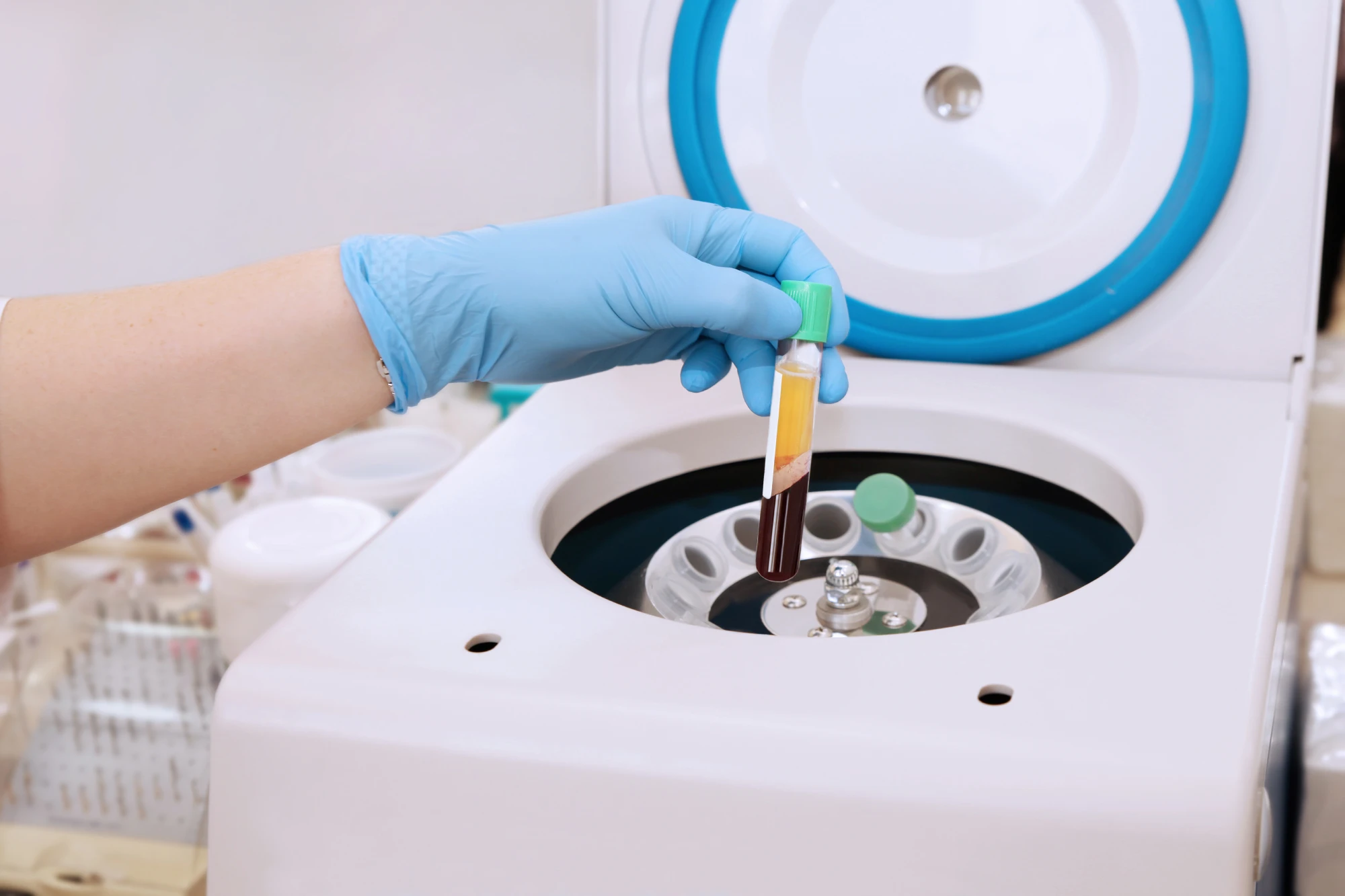
The process begins with a blood draw. The patient’s blood is placed into a centrifuge, which separates different components of the blood so that a platelet-rich portion can be collected.
That concentrated plasma is then injected into the area being treated.
Platelets are best known for their role in clotting, but they also contain growth factors and signaling proteins involved in the body’s response to tissue injury.
Because PRP is produced from the patient’s own blood, it is considered an autologous treatment.
PRP is used in different areas of medicine and orthopedics, including research and clinical use involving certain tendon injuries and joint conditions. However, its effectiveness varies depending on the condition and preparation used.
2. What Are Umbilical Cord Stem Cells?
Umbilical cord-derived regenerative products come from donated tissue collected after birth.
At The Re/ Clinic, our regenerative medicine program includes umbilical cord-derived therapies as part of personalized treatment protocols.
Umbilical cord tissue, particularly tissue known as Wharton’s jelly, has been extensively studied as a potential source of mesenchymal stromal or stem cells.
Unlike PRP, this is an allogeneic approach, meaning the biologic material comes from a donor rather than the patient receiving treatment.
Clinical researchers continue to study umbilical cord-derived mesenchymal cells for musculoskeletal conditions. For example, randomized research has evaluated umbilical cord-derived MSCs in patients with knee osteoarthritis.
It is important to separate ongoing clinical research from FDA approval.
The FDA states that regenerative medicine therapies marketed for orthopedic conditions such as knee, hip, neck, back, and shoulder pain have not been FDA-approved for those uses.
3. Umbilical Cord Stem Cells vs PRP: Key Differences
| PRP | Umbilical Cord-Derived Cell Therapy | |
| Source | Patient’s own blood | Donated umbilical cord tissue |
| Type | Autologous | Allogeneic |
| Primary components | Platelets, plasma, growth factors and signaling proteins | Depends on the specific tissue or cell product |
| Blood draw required? | Yes | No blood draw needed to obtain the biologic product |
| Cell source | Does not involve administering donor MSCs | May involve umbilical cord-derived cellular or tissue products |
| Research | Studied extensively in several orthopedic conditions | Growing body of research, including clinical trials |
| FDA status for orthopedic conditions | Depends on the PRP preparation and use | Cell-based regenerative therapies are not FDA-approved for orthopedic conditions |
| Can they be combined? | Sometimes | Sometimes |
The key point is that PRP is not simply a weaker version of stem cell therapy.
They are different biologic approaches.
4. How Does PRP Work?
PRP is intended to deliver a concentrated amount of platelets and their associated signaling proteins to a targeted area.
AAOS describes PRP as a blood-derived product in which a patient’s blood is separated to produce plasma with an increased concentration of platelets.
Researchers are particularly interested in growth factors released from activated platelets because these molecules participate in processes involved in tissue repair and inflammation.
That does not mean PRP automatically regenerates damaged cartilage, tendons, or ligaments.
Its effectiveness depends heavily on:
- The condition being treated
- The severity of the injury
- How the PRP is prepared
- Platelet concentration
- Whether white blood cells are included
- Injection technique
- Number of treatments
- Patient-specific factors
This variability is one reason studies of PRP sometimes produce different results. Medicine consultation should explain both sides.
5. How Are Umbilical Cord-Derived Cells Being Studied?
Umbilical cord-derived mesenchymal stromal cells are being investigated for several potential biological effects.
Researchers have studied their signaling activity, interactions with inflammatory pathways, and potential influence on the environment surrounding injured or degenerative tissue.
For example, a randomized controlled trial involving patients with knee osteoarthritis compared one or two doses of umbilical cord-derived mesenchymal stromal cells with an active control. Researchers reported improvements in pain and function in the MSC groups at one year.
That is encouraging research, but one study does not establish that every umbilical cord-derived product will produce the same result.
Differences in:
- Cell preparation
- Cell dose
- Processing
- Tissue source
- Storage
- Administration
- Patient selection
can all affect whether results from one study apply to another product or treatment protocol.
6. Is Stem Cell Therapy Stronger Than PRP?
Patients ask us this frequently.
It is tempting to think of regenerative medicine as a ladder:
PRP first, then stem cells if you want something “stronger.”
That is an oversimplification.
PRP and cell-based therapies contain different biological components and have different research behind them.
Some patients may be reasonable candidates for PRP.
Others may be interested in discussing a cell-based approach.
In certain cases, a provider may discuss using both.
The choice should depend on the actual condition rather than simply choosing whichever treatment sounds more advanced.
7. Can PRP and Stem Cells Be Used Together?
Yes, they may be used together in some regenerative medicine protocols.PRP can be administered independently or in combination with stem cell therapy.
Researchers have also investigated combinations of mesenchymal stromal cells and platelet-derived products.
However, there is not yet strong human evidence proving that combining PRP and MSC therapy is always superior to using either treatment by itself.
Recent reviews have specifically noted that direct human trials adequately testing whether PRP and MSCs have a meaningful synergistic effect remain limited.
So while a combination may be considered in certain protocols, more biologics does not automatically mean better results.
8. What Does the Research Show?
There is considerably more research on PRP than many patients realize.
AAOS reports that PRP has shown evidence of benefit for some musculoskeletal conditions, particularly certain chronic tendon injuries. Research for other injuries and joint conditions remains mixed.
Cell-based therapies are also being actively studied.
One randomized study of knee osteoarthritis reported improvements following umbilical cord-derived MSC treatment compared with an active comparator at one-year follow-up.
Researchers have also performed studies comparing PRP with other cellular orthobiologics. For example, a randomized trial comparing PRP with microfragmented adipose tissue for knee osteoarthritis found clinically meaningful improvement in both groups at six months, without a significant difference between them. That study did not use umbilical cord-derived cells, but it demonstrates why broad statements that “stem cells are better than PRP” are difficult to support.
Another important point is that research findings for one body part cannot automatically be applied to another.
Evidence involving knee osteoarthritis does not prove effectiveness for a torn rotator cuff, spinal disc disease, hip arthritis, or another condition.
9. Which Treatment Might Be Considered?
There is no simple answer.
A regenerative medicine provider should first determine what is actually causing your symptoms.
During an evaluation, factors may include:
- Your diagnosis
- Severity of tissue damage
- How long symptoms have been present
- MRI or X-ray findings
- Previous injuries
- Previous surgeries
- Physical therapy history
- Previous injections
- Age
- Overall health
- Activity level
- Treatment goals
- Budget
- Your comfort with the available evidence and regulatory status
For one patient, PRP may be reasonable to discuss.
For another, a different biologic approach may be considered.
For someone else, regenerative treatment may not be appropriate at all.
The goal should not be to choose between PRP and stem cells before you have been evaluated.
10. What Happens During a Consultation at The Re/ Clinic?
At The Re/ Clinic in Sandy, Utah, regenerative treatment starts with a medical consultation.
The provider may review:
Your Symptoms
Where does it hurt?
How long has it been bothering you?
What activities are difficult now?
Previous Treatments
Have you tried physical therapy?
Cortisone injections?
PRP?
Surgery?
Medication?
Imaging
If you have an MRI, X-ray, CT scan, or previous medical records, these can help the provider understand the extent of the problem.
Your Goals
Are you trying to return to a sport?
Avoid or delay a more invasive procedure?
Improve your ability to work?
Walk comfortably?
Get back into the gym?
These details matter when determining which options are worth discussing.
If regenerative treatment is considered appropriate, the provider can then explain why PRP, an umbilical cord-derived therapy, a combination approach, or another option may be considered.
Frequently Asked Questions
Is PRP the same thing as stem cell therapy?
No.
PRP is created from a patient’s own blood and contains concentrated platelets and associated growth factors.
Umbilical cord-derived cell therapy comes from donated birth tissue and represents a different type of biologic treatment.
Is PRP better than stem cells?
There is no evidence supporting a universal answer.
Results depend on the condition, biologic product, severity of injury, treatment technique, and patient.
Different clinical studies have also evaluated very different types of cellular products, so “stem cell therapy” should not be treated as one standardized intervention.
Are stem cells better for severe injuries?
Not automatically.
Severity can actually make proper evaluation even more important.
Some structural injuries may require surgical evaluation regardless of whether regenerative medicine is available.
Does PRP contain stem cells?
PRP is primarily a platelet and plasma preparation derived from blood. It should not be confused with a mesenchymal stem or stromal cell product.
Are umbilical cord stem cells taken from babies?
Umbilical cord tissue used for research and regenerative applications is obtained from tissue remaining after delivery and cord clamping, with donor consent and appropriate screening and processing procedures. The Re/ Clinic describes its cord products as coming from donated birth tissue.
Does PRP require a blood draw?
Yes.
PRP is made from the patient’s own blood, so blood is collected before the PRP preparation is created.
Can PRP and stem cells be injected together?
They may be incorporated together in some treatment protocols.
The Re/ Clinic currently uses PRP independently or in combination with regenerative cell therapy depending on the individual treatment plan.
However, research has not established that a combination is automatically better for every patient or condition.
Is umbilical cord stem cell therapy FDA-approved for joint pain?
No.
The FDA states that regenerative medicine therapies have not been approved for orthopedic conditions such as osteoarthritis, tendonitis, back pain, knee pain, hip pain, neck pain, or shoulder pain.
PRP or Stem Cells? Start With the Diagnosis
If you are researching PRP versus stem cell therapy, you do not need to decide which treatment you want before talking with a provider.
First, determine what is causing the problem.
At The Re/ Clinic in Sandy, Utah, our medical team evaluates your symptoms, medical history, previous treatment, imaging, and goals before discussing regenerative options.
Depending on your individual situation, that conversation may include PRP, umbilical cord-derived regenerative therapy, a combination protocol, or an entirely different recommendation.
Schedule a consultation with The Re/ Clinic to discuss which options may be appropriate for you.
Call: 385-240-1000
Location: 9035 S 700 E, Sandy, UT 84070
References
1. American Academy of Orthopaedic Surgeons. Platelet-Rich Plasma (PRP). OrthoInfo.
2. American Academy of Orthopaedic Surgeons. Orthobiologics FAQ. OrthoInfo.
3. Matas J, et al. Umbilical Cord-Derived Mesenchymal Stromal Cells for Knee Osteoarthritis: A Phase I/II Randomized Controlled Study. Stem Cells Translational Medicine. 2019.
4. Baria M, et al. Platelet-Rich Plasma Versus Microfragmented Adipose Tissue for Knee Osteoarthritis: A Randomized Controlled Trial. Orthopaedic Journal of Sports Medicine. 2022.
5. Obaid A, et al. Platelet-Rich Plasma and Stem Cell Therapies for Musculoskeletal Disorders. 2026. Review of current evidence, including limitations in comparative human trials.
6. U.S. Food and Drug Administration. Important Patient and Consumer Information About Regenerative Medicine Therapies.