 Skip to content
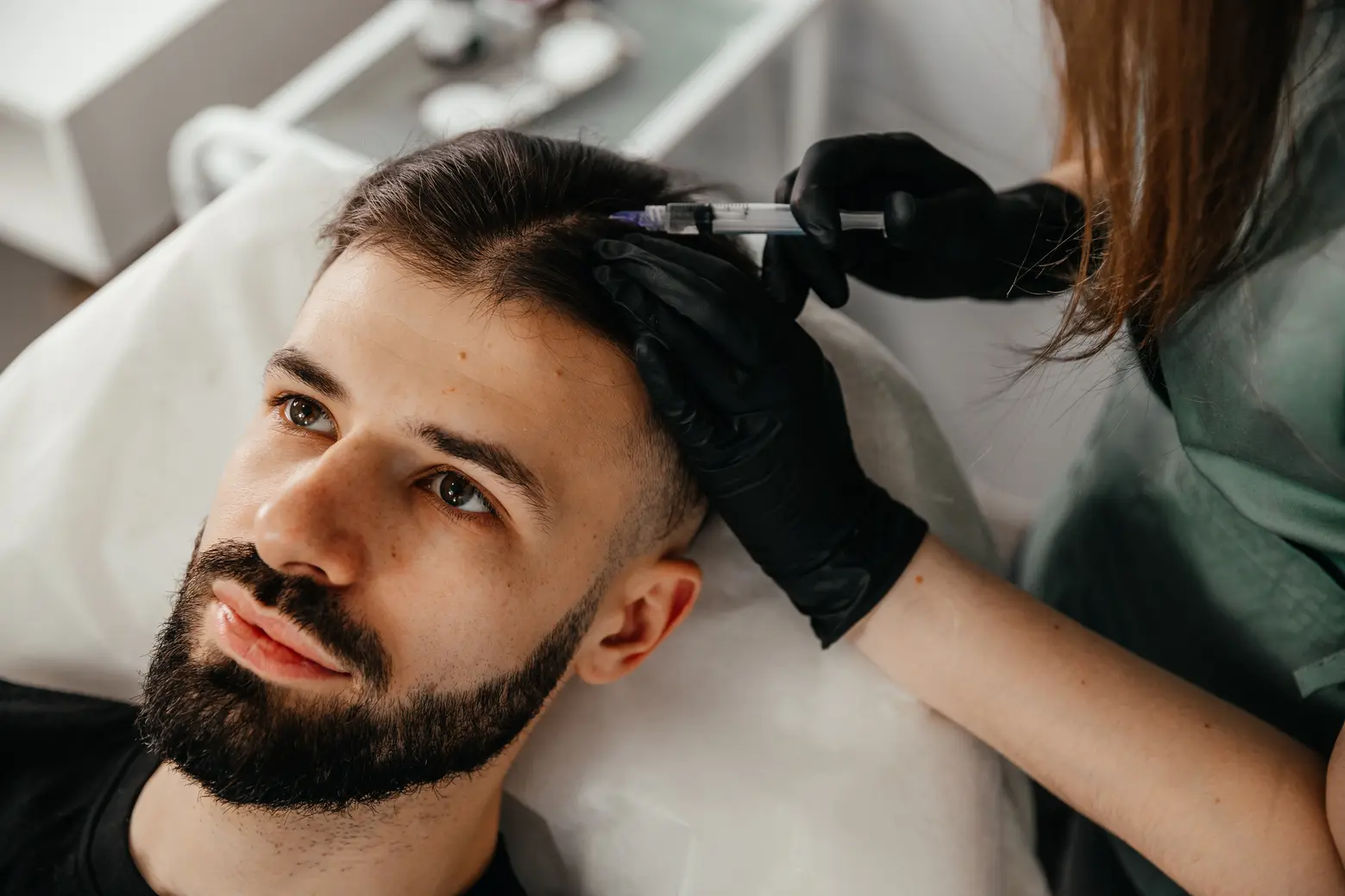





Hair loss is frustrating partly because there is rarely one simple explanation or one perfect solution.
Some people notice gradual thinning over years. Others begin shedding after stress, illness, hormonal changes, rapid weight loss, pregnancy, or medication changes. And treatments that work well for one type of hair loss may not make sense for another.
That is why regenerative hair restoration has increasingly focused on the environment surrounding the hair follicle, not simply the hair shaft itself.
At The Re/ Clinic in Sandy, Utah, our hair restoration approach may incorporate multiple biologic strategies, including platelet-rich plasma, umbilical cord-derived regenerative products, exosomes, growth-factor therapies, and peptides such as GHK-Cu. Our current hair-restoration service specifically describes a protocol using PRP together with umbilical-cord-derived allograft tissue.
But what does the research actually show about stem cells, exosomes, growth factors, and copper peptides for hair loss?
And does combining them automatically make a treatment more effective?
Here is what patients should know.
Table of Contents
Quick Answer: Can Stem Cells, Exosomes, and GHK-Cu Help With Hair Loss?
Possibly, but the answer depends heavily on what type of hair loss is being treated and which biologic product is being used.
Human research has shown encouraging findings involving several regenerative approaches.
For example, a 2024 clinical trial involving autologous hair-follicle-derived mesenchymal stem cells reported improvements in terminal-hair proportion and hair-shaft diameter in patients with androgenetic alopecia. Importantly, those cells came from the patients’ own hair follicles and were not the same product as an umbilical-cord-derived allograft.
Early human studies involving mesenchymal-stem-cell-derived exosomes have also reported increases in hair density among patients with androgenetic alopecia. However, studies remain relatively small, products vary considerably, and there are currently no FDA-approved exosome products.
Copper peptides and growth-factor formulations have biological rationale and some human research behind them, but the evidence for GHK-Cu alone as a stand-alone hair-loss treatment is considerably more limited.
So the most accurate answer is:
Regenerative hair treatments are an active and promising area of research, but different biologics have different levels of evidence and should not be presented as guaranteed hair-regrowth treatments.
Watch: Amanda Brandao, RN, Explains The Re/ Clinic’s Hair Restoration Approach
Video Transcript
Amanda Brandao, RN:
If you’re dealing with hair loss, chances are you’ve tried time and again and found nothing to work.
Here at The Re/ Clinic, our patients find success because we combine biologics: stem cells, exosomes, growth-factor peptides, GHK-Cu.
And by combining these biologics, we’re able to see so many benefits, including decreasing inflammation, cleaning out debris, and stimulating blood flow.
Essentially, we’re creating a healthy space for your hair to grow and become healthy.
And this is why our hair treatments are so successful.
Transcript lightly edited for punctuation and readability without changing the speaker’s meaning.
Important Context About the Video
Amanda’s explanation captures the idea behind a multi-biologic approach, but several phrases deserve additional context.
First, hair loss has many possible causes, and a biologic treatment will not address every one of them.
Second, phrases such as “decreasing inflammation,” “stimulating blood flow,” and “cleaning out debris” are simplified ways of discussing a much more complicated tissue environment.
Researchers studying regenerative hair therapies are investigating biological processes involving:
- Hair-follicle signaling
- Dermal papilla cells
- Growth factors
- Angiogenic signaling
- Inflammatory pathways
- Extracellular vesicles
- Hair-cycle regulation
The research does not establish that every regenerative product literally “cleans debris” from the scalp or guarantees a healthier follicle environment.
Finally, combining multiple treatments does not automatically prove that the combination is superior.
Each component needs to be considered based on the patient’s diagnosis, the product being used, available evidence, and the provider’s clinical judgment.
1. Start With the Type of Hair Loss
Before discussing stem cells, exosomes, or peptides, the first question should be:
Why are you losing hair?
Hair loss is not one diagnosis.
Different forms include:
Androgenetic Alopecia
Commonly called male-pattern or female-pattern hair loss.
It involves progressive miniaturization of susceptible hair follicles and is the condition studied in much of the regenerative hair-restoration research discussed in this article.
Telogen Effluvium
Diffuse shedding can occur after physiological or emotional stressors.
Possible triggers may include illness, surgery, nutritional changes, hormonal shifts, or significant weight change.
Alopecia Areata
An autoimmune form of hair loss that behaves very differently from androgenetic alopecia.
Scarring Alopecia
Certain inflammatory hair disorders can permanently damage follicles.
These conditions may require evaluation and management by a dermatologist.
Hair Loss Related to Other Medical Issues
Hair thinning may also be associated with issues such as:
- Iron deficiency
- Thyroid dysfunction
- Hormonal changes
- Nutritional deficiencies
- Medication effects
- Significant weight loss
- Systemic illness
That is why treating the scalp without considering the underlying cause can miss an important part of the problem.
2. Why Does the Hair-Follicle Environment Matter?
Hair follicles are living structures.
They repeatedly cycle through phases of:
- Growth
- Transition
- Rest
- Shedding
Within the follicle, specialized cells communicate through complex molecular signaling pathways.
One particularly important group is dermal papilla cells, which help regulate hair-follicle growth and cycling.
Many experimental regenerative treatments are therefore designed around the idea of influencing the biological environment surrounding existing follicles rather than simply adding something to the hair shaft.
This is also why most regenerative approaches are most interesting when viable follicles remain.
If a follicle has been permanently destroyed, stimulating the surrounding environment may not recreate a completely new functional follicle.
3. Stem Cells for Hair Loss
Stem cells have attracted attention in hair research because hair follicles naturally contain several specialized cell populations involved in regeneration.
Researchers have investigated multiple approaches, including:
- Hair-follicle-derived cells
- Adipose-derived stem-cell products
- Mesenchymal stem cells
- Stem-cell-conditioned media
- Cell-derived signaling products
These approaches are not interchangeable.
A Human Stem-Cell Trial
A clinical trial published in 2024 included 50 adults with androgenetic alopecia.
Researchers removed healthy hair follicles from the back of the participants’ scalps and prepared an autologous hair-follicle mesenchymal stem-cell suspension.
Treated scalp areas received the cell suspension, while comparison areas received saline.
Researchers reported increases in terminal-hair proportion and hair-shaft diameter in the treated areas, particularly among more miniaturized follicles.
The study is interesting, but there is an important limitation when applying it to other treatments.
It studied:
autologous hair-follicle-derived cells
not:
umbilical-cord-derived cells.
Results from one cell source cannot automatically establish the effectiveness of a different biologic product.
4. Exosomes for Hair Loss
Exosomes are tiny extracellular vesicles released by cells.
They can carry biological cargo involved in cell-to-cell communication.
Researchers are interested in exosomes derived from mesenchymal stromal cells because they may carry:
- Proteins
- Lipids
- RNA
- Other signaling molecules
Rather than functioning as living stem cells themselves, exosomes are being investigated as cell-free signaling products.
What Do Human Studies Show?
A prospective study involving 30 men with androgenetic alopecia evaluated exosomes derived from foreskin mesenchymal stromal cells.
Researchers reported a statistically significant increase in hair density following treatment.
Another prospective study following patients for 12 months reported increased hair density after an exosome treatment combined with microneedling, although the lack of a large placebo-controlled design makes it difficult to determine exactly how much of the result came from the exosome product itself.
Research involving adipose-stem-cell-derived exosomes has also reported increased hair density in small clinical populations with androgenetic alopecia.
What About Umbilical Cord-Derived Exosomes?
This is particularly relevant to regenerative medicine clinics using birth-tissue products.
Clinical researchers are currently studying human umbilical cord mesenchymal stem-cell-derived exosomes for androgenetic alopecia.
One active randomized clinical trial is comparing different treatment frequencies, while another current trial is evaluating umbilical-cord-derived extracellular vesicles against topical minoxidil. Those studies are ongoing, so final results are not yet available.
That means there is scientific interest, but the evidence is still developing.
Are Exosomes FDA-Approved for Hair Loss?
No.
In fact, the FDA currently states that there are no FDA-approved exosome products for any indication.
The FDA regulates exosome products intended to treat diseases or conditions and has warned consumers about unapproved products marketed with claims that have not been established through FDA review.
5. Growth Factors and Hair Restoration
Growth factors are signaling proteins involved in communication between cells.
Hair researchers have investigated molecules involved in processes such as:
- Follicle growth
- Cell proliferation
- Angiogenesis
- Hair-cycle signaling
One first-in-human pilot study evaluated an injectable formulation containing multiple recombinant growth factors together with copper tripeptide-1.
The formulation included factors such as:
- Vascular endothelial growth factor
- Basic fibroblast growth factor
- Insulin-like growth factor
- Keratinocyte growth factor
- Thymosin beta-4
- Copper tripeptide-1
The study reported improvement in hair-related outcomes following treatment.
However, because the formulation contained multiple active ingredients, the study cannot tell us which individual ingredient produced the observed effect.
That distinction becomes especially important when discussing peptides like GHK-Cu.
6. What Is GHK-Cu?
GHK-Cu is a copper-binding peptide.
GHK stands for the amino-acid sequence:
glycine-histidine-lysine
When the peptide binds copper, it forms the GHK-Cu complex.
Copper peptides have been investigated in tissue remodeling, wound biology, skin care, and hair-related research.
The Re/ Clinic video includes GHK-Cu as one component of its broader biologic hair-restoration strategy.
That does not mean GHK-Cu should be viewed as a proven stand-alone treatment for androgenetic alopecia.
7. Does GHK-Cu Actually Grow Hair?
There is biologic rationale, but the human evidence is more limited than social media sometimes suggests.
Laboratory research involving a related copper tripeptide, AHK-Cu, found that it stimulated elongation of isolated human hair follicles and increased proliferation of cultured dermal papilla cells. That was an ex vivo and laboratory study, not a clinical trial showing that injections or topical GHK-Cu regrow hair in patients.
Human studies have evaluated formulations containing copper tripeptide alongside several other growth factors. Those studies cannot isolate the independent effect of the copper peptide.
So the evidence supports saying:
Copper peptides are biologically interesting and are being investigated in hair-growth applications.
It does not support saying:
GHK-Cu alone has been proven to regrow hair.
8. Why Combine Different Biologics?
This is the core concept Amanda discusses in the video.
Different biologic approaches are intended to affect different aspects of the follicular environment.
For example:
PRP
Provides a concentration of the patient’s own platelets and associated signaling proteins.
Cell-Based Products
May contain cells or tissue-derived components with different signaling characteristics depending on the specific product.
Exosomes
Are extracellular signaling vesicles rather than living stem cells.
Growth Factors
Act as molecular signals involved in cellular communication.
GHK-Cu
Is a copper-binding peptide being investigated for effects related to tissue remodeling and hair-follicle biology.
Conceptually, using multiple approaches may allow a provider to address the scalp environment through several biological pathways.
But a biological rationale for combination therapy is different from clinical proof that a particular combination is superior.
9. Does Combining Biologics Guarantee Better Hair Growth?
No.
This is an important point because combination therapies can sound intuitively stronger.
If one therapy is potentially useful, it is tempting to assume:
four therapies must be four times better.
Biology does not work that way.
Clinical research needs to evaluate:
- Which products are combined
- Doses
- Treatment frequency
- Delivery method
- Patient selection
- Hair-loss diagnosis
- Objective outcomes
Many published studies evaluate one specific regenerative approach.
For example, the stem-cell study discussed earlier used cells obtained from patients’ own hair follicles.
Exosome studies have used products derived from different tissues and manufacturing processes.
Those results cannot automatically prove the effectiveness of a completely different multi-biologic protocol.
At The Re/ Clinic, treatment recommendations should therefore be individualized rather than promising the same outcome for every patient.
10. Who Might Consider Regenerative Hair Restoration?
The first step is determining whether there are still follicles with the potential to respond.
A consultation may be especially relevant for patients experiencing:
- Early or moderate thinning
- Male-pattern hair loss
- Female-pattern hair loss
- Progressive loss of hair density
- Hair miniaturization
- Reduced hair-shaft thickness
Other types of hair loss may need additional evaluation first.
For example, someone experiencing sudden diffuse shedding after major weight loss may have a very different problem from someone with progressive androgenetic alopecia.
Likewise, signs of scarring, significant scalp inflammation, patchy autoimmune hair loss, or another dermatologic condition may warrant evaluation by a dermatologist.
11. What Happens During a Hair Restoration Evaluation at The Re/ Clinic?
The Re/ Clinic currently offers Hair Restoration Cell Therapy at its Sandy, Utah location using a personalized approach that includes PRP and umbilical-cord-derived allograft tissue.
Before recommending treatment, the clinical team may evaluate:
Your Hair-Loss Pattern
Where are you thinning?
Is it:
- Frontal?
- Temporal?
- Crown?
- Diffuse?
- Patchy?
Your Timeline
When did you first notice shedding or thinning?
Was it sudden or gradual?
Your Medical History
Hair changes can sometimes occur alongside changes involving:
- Hormones
- Nutrition
- Thyroid health
- Medications
- Weight
- Stress
- Illness
Your Previous Treatments
Have you already tried:
- Minoxidil?
- Finasteride?
- Supplements?
- PRP?
- Microneedling?
- Red-light devices?
- Hair transplant?
- Other regenerative treatments?
Your Goals
Are you hoping to:
- Reduce visible thinning?
- Improve density?
- Improve hair caliber?
- Address a widening part?
- Support existing hair?
- Delay or complement hair transplantation?
Those goals influence which options are reasonable to discuss.
12. What Does Treatment Involve?
The exact protocol should depend on the individual patient.
The Re/ Clinic’s current hair-restoration service describes treatment involving PRP and umbilical-cord-derived allograft tissue injected into thinning areas of the scalp.
Depending on the treatment plan, discussions may also include other biologic components such as exosomes, growth factors, or peptide support.
The procedure is nonsurgical.
Patients should receive information beforehand about:
- What products are being administered
- Where those products come from
- FDA approval status
- Potential risks
- Expected discomfort
- Aftercare
- Treatment schedule
- Realistic expectations
If a stem-cell or exosome product is being used, patients should understand that FDA has not approved those regenerative products for hair-loss treatment.
13. When Might Hair-Regrowth Results Appear?
Hair changes are slow.
A follicle has to progress through its natural growth cycle before changes become visible above the scalp.
Clinical regenerative-hair studies commonly evaluate outcomes over periods such as:
- 8 weeks
- 12 weeks
- 16 weeks
- 24 weeks
- 6 months
- 12 months
For example, the 2024 hair-follicle-derived MSC study followed participants for nine months.
Published exosome studies have also evaluated hair-density changes over several months rather than days or weeks.
Patients should therefore be cautious about promises of immediate hair regrowth.
Standardized before-and-after photography and objective hair-density measurements are much more useful than judging the treatment from one week to the next.
Frequently Asked Questions
Can stem cells regrow hair?
Stem-cell-based approaches are being investigated for androgenetic alopecia.
A 2024 human trial using patients’ own hair-follicle-derived mesenchymal stem cells reported improvements in hair characteristics after treatment.
However, that does not prove that every type of stem-cell product will produce the same result.
Do umbilical cord stem cells regrow hair?
Human research specifically involving umbilical-cord-derived products for hair restoration remains limited.
Studies involving one stem-cell source should not automatically be applied to a different cell source.
Clinical research involving umbilical-cord-derived exosomes for androgenetic alopecia is currently ongoing.
Do exosomes help hair loss?
Early human studies have reported increases in hair density following several types of stem-cell-derived exosome treatments.
However, studies remain relatively small and use different products and protocols.
There are currently no FDA-approved exosome products.
Are exosomes the same as stem cells?
No.
Stem cells are living cells.
Exosomes are small extracellular vesicles released by cells that carry biological signaling material.
They are fundamentally different products.
What does GHK-Cu do for hair?
Copper peptides are being studied for potential effects involving dermal papilla cells, tissue signaling, and hair-follicle biology.
Laboratory research involving AHK-Cu found increased human hair-follicle elongation outside the body and increased dermal-papilla-cell proliferation.
Strong clinical evidence establishing injectable or topical GHK-Cu alone as an effective hair-loss treatment remains limited.
Are growth factors the same as peptides?
Not necessarily.
Some growth factors are proteins or peptides involved in cell signaling, while other therapeutic peptides have different biological roles.
The terms should not automatically be used interchangeably.
Is inflammation causing my hair loss?
Inflammation may contribute to some hair-loss conditions, but it is not the cause of every form of hair loss.
Androgenetic alopecia, autoimmune hair loss, telogen effluvium, scarring alopecia, and medically related shedding involve different biological mechanisms.
A proper diagnosis matters.
Does improving blood flow regrow hair?
Hair follicles require an adequate blood supply, and angiogenic signaling is an area of hair research.
However, increasing scalp blood flow alone should not be presented as a guaranteed way to reverse hair loss.
Hair growth depends on multiple biological factors.
Can biologic hair therapy bring back completely bald areas?
That depends on whether viable follicles remain.
Regenerative therapies generally rely on influencing existing follicular structures.
Long-standing areas where follicles have been permanently lost may respond differently and may require discussion of alternatives such as hair transplantation.
Is regenerative hair therapy FDA-approved?
The FDA currently states that the only approved stem-cell products in the United States are certain cord-blood-derived blood-forming stem cells for specific hematologic conditions.
They are not approved for hair loss.
There are also currently no FDA-approved exosome products.
How many hair-restoration treatments will I need?
There is no universal evidence-based number that applies to every regenerative hair protocol.
The schedule depends on:
- Diagnosis
- Treatment being used
- Hair-loss severity
- Patient response
- Provider protocol
Your treatment plan should be discussed during the evaluation.
Hair Loss Is Not One Problem, So Treatment Shouldn’t Be One-Size-Fits-All
The idea behind regenerative hair restoration is not simply to inject something into the scalp and hope new hair appears.
It is to understand the condition of the follicles, the biological environment surrounding them, and the factors contributing to hair loss.
At The Re/ Clinic in Sandy, Utah, our hair restoration approach may combine multiple regenerative strategies depending on the patient’s individual needs. Our current service includes PRP and umbilical-cord-derived allograft tissue as part of Hair Restoration Cell Therapy.
If you are dealing with thinning or progressive hair loss, the first step is determining why the hair is changing and whether the follicles may be reasonable targets for treatment.
Schedule a hair restoration evaluation with The Re/ Clinic to discuss your hair loss, treatment history, and available options.
Call: 385-240-1000
Location: 9035 S 700 E, Sandy, UT 84070
References
- Gan Y, Du L, Wang H, et al. A Clinical Trial of Treating Androgenic Alopecia with Mesenchymal Stem Cell Suspension Derived from Autologous Hair Follicle. Plastic and Reconstructive Surgery. 2024. Human trial evaluating autologous hair-follicle-derived MSCs in patients with androgenetic alopecia.
- Prospective clinical study of stem-cell-derived exosomes for androgenetic alopecia. Human study evaluating foreskin-derived mesenchymal stromal cell exosomes in 30 men with AGA and reporting increased hair density following treatment.
- Prospective Study of Exosome Therapy for Androgenetic Alopecia. 2025. Study evaluating hair density and patient-reported outcomes following exosome therapy combined with microneedling.
- The efficacy of adipose stem cell-derived exosomes in hair regeneration based on a preclinical and clinical study. 2024. Human participants with androgenetic alopecia demonstrated increased hair-density outcomes following treatment in this early study.
- ClinicalTrials.gov NCT07203599. A Study on the Treatment of Androgenetic Alopecia in Young Men With Umbilical Cord Mesenchymal Stem Cell Exosomes. Ongoing randomized clinical research involving hUCMSC-derived exosomes.
- ClinicalTrials.gov NCT06697080. Umbilical Cord-derived Mesenchymal Stem Cell Exosomes on Hair Growth in Patients With Androgenetic Alopecia. Clinical investigation of umbilical-cord-derived MSC exosomes and hair growth.
- Intradermal injections of a hair growth factor formulation for enhancement of human hair regrowth: safety and efficacy evaluation in a first-in-man pilot clinical study. This injectable formulation contained multiple growth factors together with copper tripeptide-1.
- Pyo HK, Yoo HG, Won CH, et al. The effect of tripeptide-copper complex on human hair growth in vitro. Archives of Pharmacal Research. 2007. Laboratory and ex vivo research involving AHK-Cu and human hair follicles.
- U.S. Food and Drug Administration. Consumer Alert on Regenerative Medicine Products Including Stem Cells and Exosomes. The FDA states there are currently no FDA-approved exosome products and that approved stem-cell products are limited to specific blood-forming cord-blood products.
- Utah Code § 58-1-512. Stem Cell Disclosure. Current Utah law requires applicable providers to provide the statutory notice for non-FDA-approved stem-cell therapy, including in applicable advertising.