 Skip to content





Feeling tired after a long week is one thing.
Feeling persistently exhausted, mentally foggy, or unable to recover even after getting enough sleep is something different.
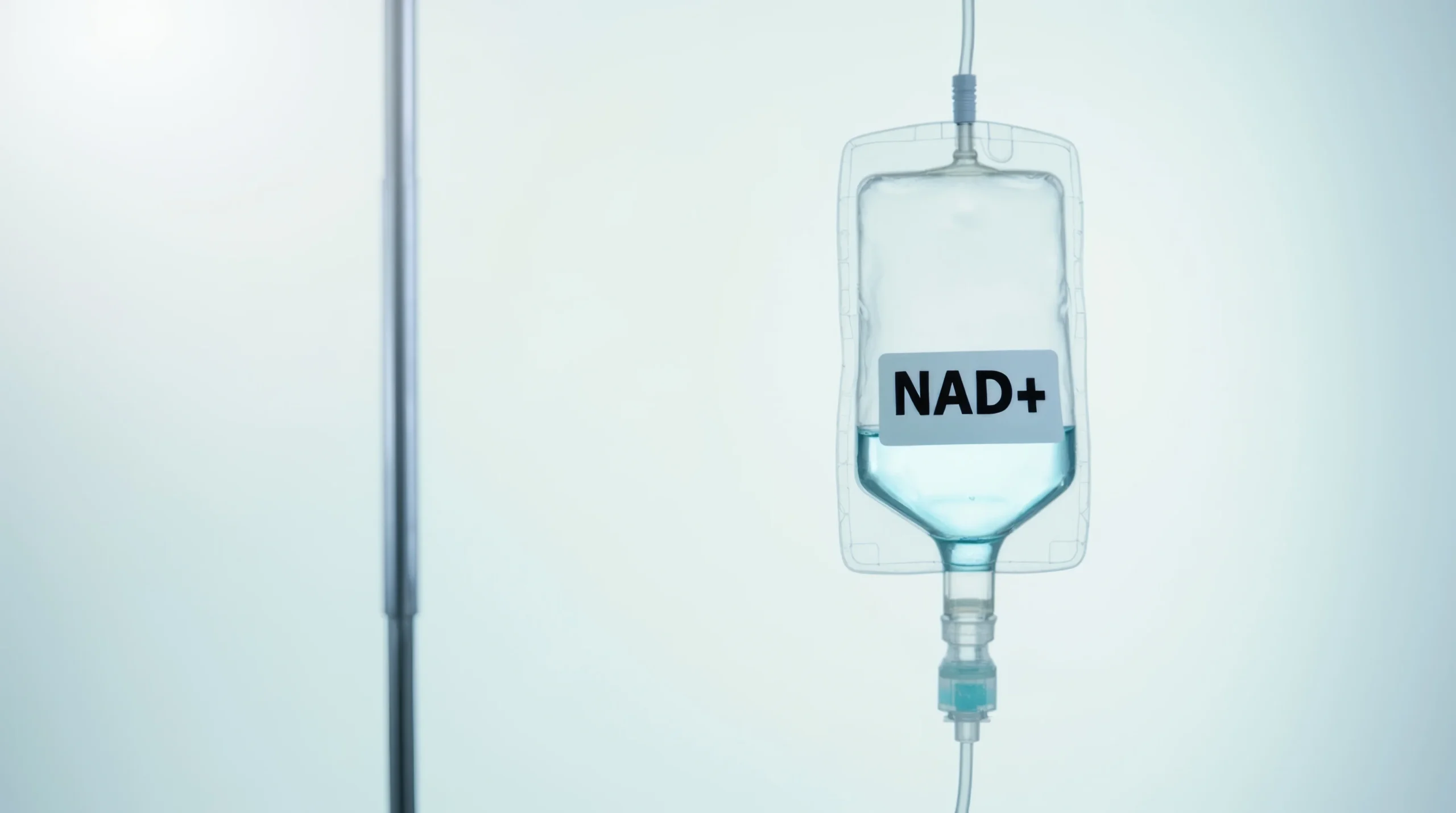
When fatigue lasts for weeks or months, people often begin searching for possible causes and treatments. One option that has gained significant attention in wellness and longevity medicine is NAD+ IV therapy.
NAD+ plays an essential role in cellular energy metabolism, which has made it an interesting area of research for fatigue, aging, metabolic health, and other conditions.
But does an NAD infusion actually help chronic fatigue?
The answer requires some nuance.
NAD+ is unquestionably important to how cells produce and use energy. However, clinical research specifically showing that IV NAD+ reliably treats chronic fatigue is still limited.
At The Re/ Clinic in Sandy, Utah, NAD+ IV therapy is offered as part of our broader approach to wellness and chronic health concerns. Before treatment, it is important to consider why someone is experiencing persistent fatigue in the first place.
Table of Contents
Quick Answer: Can NAD+ IV Therapy Help Chronic Fatigue?
NAD+, or nicotinamide adenine dinucleotide, is a molecule involved in cellular metabolism, mitochondrial function, DNA repair, and many other biological processes.
Because NAD+ is closely involved in energy metabolism, researchers have investigated NAD-related compounds in people experiencing fatigue and other chronic symptoms.
Some studies involving oral NADH, which is different from intravenous NAD+, have reported improvements in fatigue symptoms. Other studies of NAD-related compounds have produced mixed findings.
Research directly evaluating IV NAD+ for chronic fatigue is much more limited.
A 2026 review of NAD+ supplementation noted that enthusiasm surrounding NAD therapies has moved faster than the clinical evidence for many wellness applications.
For that reason, NAD+ IV therapy should not be presented as a proven cure for chronic fatigue or as a replacement for investigating an underlying medical cause.
Watch: Have You Heard of NAD Therapy?
Neck Pain Relief with Stem Cell & PRP Therapy!
This short video from The Re/ Clinic introduces NAD therapy and why NAD+ has become such a popular topic in wellness, energy, and longevity medicine.
Video Transcript
If you’re dealing with chronic health issues and constantly feeling drained, NAD+ might be a good option to talk to your doctor about.
Many people with chronic health conditions struggle with persistent fatigue, brain fog, low energy, and having a hard time recovering from everyday activities. While these symptoms can have many different causes, they can have a big impact on quality of life.
NAD therapy is a way to support the body’s natural metabolic processes on a cellular level and replenish those cells.
It’s not a cure for chronic conditions, but many of our patients report improvements in their quality of life, reduced inflammation, mental clarity, and more.
It should be seen as a tool added to a comprehensive treatment plan, not as a cure for the underlying diagnosis.
Transcript lightly edited for readability without changing the speaker’s meaning.
1. What Is NAD+?
NAD+ stands for nicotinamide adenine dinucleotide.
It is a naturally occurring molecule found throughout the body and is necessary for hundreds of biochemical reactions.
One of its most important roles involves helping cells convert nutrients from food into usable cellular energy.
NAD+ also participates in processes involving:
- Cellular metabolism
- Mitochondrial function
- DNA repair
- Oxidative stress
- Cell signaling
- Enzyme activity
Unlike caffeine or other stimulants, NAD+ is not simply an ingredient that temporarily makes someone feel more alert.
It is part of the cellular machinery involved in how the body processes energy.
2. Why Is NAD+ Connected to Energy?
Your cells need energy to function.
Much of that energy is produced through metabolic pathways that ultimately generate ATP, often described as the body’s cellular energy currency.
NAD+ helps transfer electrons during these metabolic reactions.
Without adequate NAD+ availability, many cellular energy pathways would not function normally.
This biological role is one reason NAD+ has attracted attention in research involving:
- Aging
- Metabolic health
- Neurological function
- Exercise
- Recovery
- Fatigue
- Chronic disease
However, understanding that NAD+ is essential for cellular metabolism does not automatically prove that giving additional NAD+ intravenously will improve fatigue.
That distinction is important.
3. What Does “Chronic Fatigue” Actually Mean?
“Chronic fatigue” is commonly used to describe persistent or recurring exhaustion, but fatigue itself is a symptom rather than a single diagnosis.
Possible contributors can include:
- Poor sleep
- Sleep apnea
- Iron deficiency
- Anemia
- Thyroid disorders
- Nutrient deficiencies
- Hormone changes
- Medication side effects
- Depression or anxiety
- Chronic infection
- Autoimmune disease
- Post-viral syndromes
- Metabolic conditions
- Overtraining
- Inadequate calorie or protein intake
- Chronic stress
Persistent fatigue should therefore not automatically be blamed on “low NAD.”
Someone who feels exhausted for months may benefit from a broader medical evaluation before assuming an IV infusion is the answer.
Chronic Fatigue vs ME/CFS
It is also important to distinguish everyday use of the phrase “chronic fatigue” from myalgic encephalomyelitis/chronic fatigue syndrome, or ME/CFS.
ME/CFS is a complex medical condition involving more than simply feeling tired.
Patients may experience symptoms such as severe activity intolerance, post-exertional symptom worsening, unrefreshing sleep, cognitive difficulties, and other systemic symptoms.
Research involving supplements or NAD-related compounds in ME/CFS should not automatically be generalized to every person experiencing fatigue.
4. Can NAD+ IV Therapy Help With Chronic Fatigue?
This is where marketing often gets ahead of research.
There is a biologically reasonable reason researchers are interested in NAD+ and energy metabolism.
But there is currently not enough high-quality evidence to conclude that IV NAD+ reliably improves chronic fatigue.
Research involving NAD-related therapies includes several different interventions:
- Intravenous NAD+
- Oral NADH
- Nicotinamide riboside, or NR
- Nicotinamide mononucleotide, or NMN
- Nicotinamide
- Other NAD+ precursors
These are not interchangeable.
A positive study involving oral NADH does not prove that an IV NAD+ infusion will produce the same result.
Likewise, studies demonstrating that a supplement increases blood NAD+ levels do not automatically demonstrate improvement in symptoms.
5. What Does the Research Show?
Research is evolving quickly, but several findings are useful for patients to understand.
NADH and Chronic Fatigue Research
Some older clinical trials investigated oral NADH in patients diagnosed with chronic fatigue syndrome.
A small randomized placebo-controlled pilot study published in 1999 reported that some participants receiving NADH experienced improvement.
Another small study published in 2004 found improvement during the early portion of treatment, although outcomes later became more similar between treatment groups.
More recent trials have also investigated NADH when combined with CoQ10 in people with ME/CFS.
For example, randomized studies have reported improvements in some fatigue-related or exercise-related outcomes following combined CoQ10 and NADH supplementation.
These studies are interesting, but there are important limitations:
- They studied NADH rather than IV NAD+
- Some combined NADH with another supplement
- Sample sizes and protocols varied
- ME/CFS is different from nonspecific fatigue
They should therefore not be interpreted as proof that NAD+ IV therapy treats chronic fatigue.
What Do Reviews Say?
A 2024 systematic review examined human research involving several forms of NAD supplementation across different clinical conditions.
The authors concluded that NAD-related interventions generally appeared to have a relatively low incidence of adverse effects in the studies reviewed, but the effectiveness varied considerably depending on the compound, condition, and outcome being studied.
A newer 2026 systematic review examined the rapidly growing use of NAD+-boosting strategies for anti-aging and wellness.
The review highlighted a major gap between the popularity of NAD therapies and the amount of strong human clinical evidence available for many of their advertised benefits.
That is particularly relevant when discussing IV NAD+.
New Research on IV NAD+
A 2026 retrospective pilot study evaluated the tolerability of intravenous NAD+ compared with intravenous nicotinamide riboside.
Participants receiving IV NAD+ frequently experienced infusion-related symptoms including:
- Nausea or gastrointestinal discomfort
- Increased heart rate
- Chest pressure
The symptoms resolved when infusions ended, but the NAD+ group generally required slower and longer infusion times.
This was primarily a tolerability study, not a trial showing that IV NAD+ treats chronic fatigue.
An earlier human study from 2019 demonstrated that intravenously administered NAD+ is metabolized during infusion, helping researchers better understand what happens to NAD+ after it enters the bloodstream.
Again, that study investigated metabolism rather than proving a clinical benefit for fatigue.
Bottom Line From the Research
Current evidence supports this conclusion:
NAD+ is central to human cellular metabolism, and NAD-related therapies remain an active area of research. However, evidence specifically proving that IV NAD+ treats chronic fatigue is currently limited.
6. NAD+ IV vs Oral NADH and NAD+ Precursors
One reason discussions about NAD therapy get confusing is that several different compounds are often grouped together.
IV NAD+
NAD+ is administered directly through an intravenous infusion.
NADH
NADH is the reduced form of NAD+ and has been used orally in several studies involving fatigue.
Nicotinamide Riboside
NR is a precursor the body can use to produce NAD+.
Nicotinamide Mononucleotide
NMN is another NAD+ precursor commonly discussed in longevity research.
These compounds have different pharmacology and research behind them.
When reading a headline about a “NAD study,” always ask:
Which form of NAD therapy did the researchers actually study?
7. What Does an NAD+ Infusion Feel Like?
NAD+ infusions are typically administered more slowly than many standard hydration or vitamin IVs.
Infusion rate matters because some people experience uncomfortable symptoms when NAD+ is administered too quickly.
Possible sensations during an infusion can include:
- Nausea
- Abdominal discomfort
- Warmth
- Flushing
- Head pressure
- Chest pressure or tightness
- Increased heart rate
- Muscle discomfort
Slowing or temporarily pausing the infusion may reduce symptoms for some patients.
Patients should communicate any symptoms to the clinical team during treatment rather than trying to “push through” significant discomfort.
8. What Are the Possible Side Effects?
Published human data on IV NAD+ remain relatively limited.
The 2026 real-world tolerability study found that infusion-related symptoms were common enough among patients receiving IV NAD+ that slower administration was often necessary.
As with any IV treatment, additional risks can include:
- Pain or bruising at the IV site
- Vein irritation
- Infection
- Dizziness
- Vasovagal reactions
Medical history, medications, current health conditions, and the reason someone is pursuing therapy should be reviewed before treatment.
9. Who Should Have Persistent Fatigue Evaluated?
If fatigue is persistent, worsening, unexplained, or interfering with everyday life, it deserves more than a quick wellness fix.
Depending on the individual, a provider may consider whether further evaluation is appropriate for issues such as:
- Anemia or low iron
- Thyroid dysfunction
- Hormone changes
- Vitamin deficiencies
- Sleep disorders
- Blood sugar problems
- Medication effects
- Mental health conditions
- Chronic illness
- Post-infectious conditions
The goal is to avoid treating a symptom while missing something important underneath it.
NAD+ therapy may be something a patient chooses to discuss, but it should be part of an individualized conversation rather than a substitute for appropriate medical evaluation.
10. What Happens During NAD+ IV Therapy at The Re/ Clinic?
The Re/ Clinic offers NAD+ IV therapy at our Sandy, Utah location as part of our IV and wellness services.
Before treatment, our team reviews your medical history and discusses what you are hoping to address.
For someone experiencing persistent fatigue, that conversation may include questions about:
- How long the fatigue has been present
- Sleep quality
- Current medications
- Medical conditions
- Nutrition
- Stress
- Exercise and recovery
- Other symptoms
- Previous laboratory testing
- Other treatments you have tried
If NAD+ IV therapy is appropriate to consider, the clinical team can explain the infusion process, potential side effects, and what you should expect during the appointment.
Because tolerance varies, the rate of NAD+ administration may be adjusted based on how you feel throughout the infusion.
Frequently Asked Questions
Does NAD+ give you energy?
NAD+ is involved in cellular energy metabolism, but that does not mean an NAD+ infusion works like caffeine or another stimulant.
Some patients pursue NAD+ therapy because of concerns involving energy and fatigue, but clinical evidence proving that IV NAD+ reliably increases energy remains limited.
Is NAD+ IV therapy proven to treat chronic fatigue?
No.
There is research involving NADH and other NAD-related compounds in fatigue and ME/CFS, but direct evidence for IV NAD+ as a proven chronic fatigue treatment is limited.
Is NAD+ IV therapy the same as NADH?
No.
NAD+ and NADH are related molecules but represent different oxidation states within cellular metabolism.
Studies involving oral NADH should not automatically be treated as studies of intravenous NAD+.
How long does an NAD+ infusion take?
NAD+ may need to be administered relatively slowly because faster infusion rates can be uncomfortable for some patients.
Treatment time can therefore vary based on the dose, protocol, and how well the patient tolerates the infusion.
Why can NAD+ make you nauseous?
Infusion-related gastrointestinal symptoms have been documented during IV NAD+ administration.
A 2026 pilot study reported moderate to severe gastrointestinal symptoms in some participants receiving NAD+ intravenously.
Slowing the infusion may improve tolerability.
Can NAD+ help brain fog?
NAD+ biology is relevant to cellular metabolism and neurological function, but there is not currently enough clinical evidence to guarantee that an NAD+ IV will improve brain fog.
Brain fog can also have many potential causes, so persistent cognitive symptoms should be evaluated appropriately.
Is NAD+ IV therapy FDA-approved for chronic fatigue?
NAD+ IV therapy is not an FDA-approved treatment for chronic fatigue or ME/CFS.
Patients should understand the difference between a therapy being offered in a wellness setting and an FDA-approved treatment for a specific medical diagnosis.
How often should someone receive NAD+ IV therapy?
There is currently no universally established, evidence-based NAD+ IV schedule for chronic fatigue.
Frequency should therefore be individualized rather than based on claims that every patient needs the same number of infusions.
Feeling Constantly Exhausted? Start With the Bigger Picture.
Persistent fatigue can affect work, exercise, concentration, relationships, and everyday quality of life.
It can also have many different causes.
At The Re/ Clinic in Sandy, Utah, our goal is not simply to tell every tired patient they need an NAD+ infusion.
We look at the broader picture, discuss your health history and goals, and help determine which wellness or medical options are reasonable to consider.
If you are interested in NAD+ IV therapy for persistent fatigue, brain fog, recovery, or overall wellness, schedule a consultation with The Re/ Clinic to learn more about the treatment and whether it may be appropriate for you.
Call: 385-240-1000
Location: 9035 S 700 E, Sandy, UT 84070
References
1. Gallagher C, Emmanuel OO. NAD+ Supplementation for Anti-Aging and Wellness: A PRISMA-Guided Systematic Review of Preclinical and Clinical Evidence. Ageing Research Reviews. 2026;116:103057.
2. Reyna K, Heinzen G, Patel N, et al. Intravenous Infusion of Nicotinamide Adenine Dinucleotide (NAD+) Versus Nicotinamide Riboside (NR): A Retrospective Tolerability Pilot Study in a Real-World Setting. Frontiers in Aging. 2026;7:1652582.
3. de Mello Gindri I, Ferrari G, Pinto LPS, et al. Evaluation of Safety and Effectiveness of NAD in Different Clinical Conditions: A Systematic Review. American Journal of Physiology-Endocrinology and Metabolism. 2024;326(4):E417-E427.
4. Grant R, Berg J, Mestayer R, et al. A Pilot Study Investigating Changes in the Human Plasma and Urine NAD+ Metabolome During a 6 Hour Intravenous Infusion of NAD+. Frontiers in Aging Neuroscience. 2019.
5. Castro-Marrero J, et al. Effect of Dietary Coenzyme Q10 Plus NADH Supplementation on Fatigue and Biochemical Parameters in ME/CFS. Clinical studies evaluating oral NADH-containing protocols in patients with ME/CFS.
6. Forsyth LM, et al. Therapeutic Effects of Oral NADH on the Symptoms of Patients With Chronic Fatigue Syndrome. Annals of Allergy, Asthma & Immunology. 1999.